Level 1 · 1.2
Mary's Room
Mary knows everything about colour, except what it is like to see it.
Step inside
What you will experience
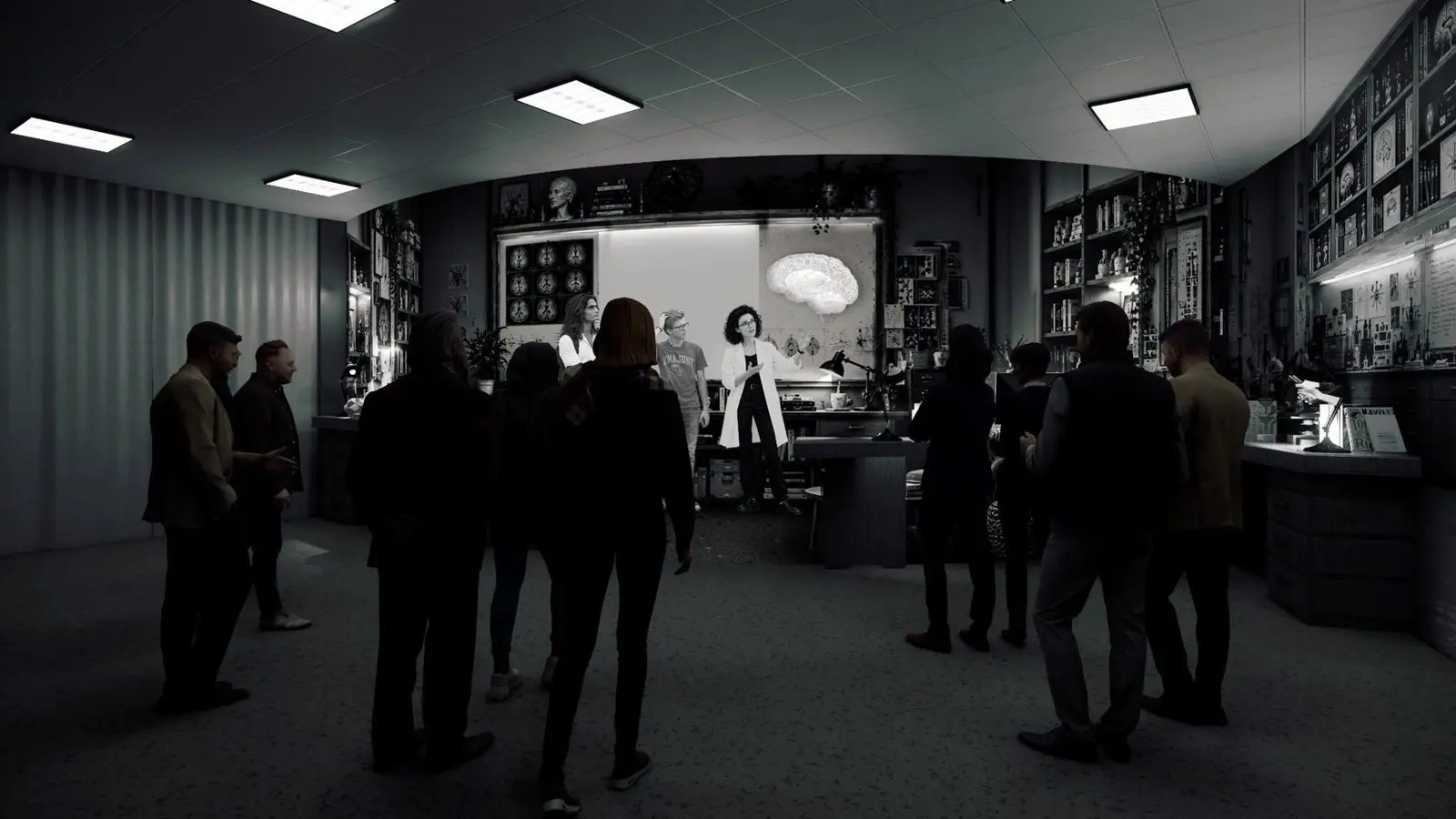
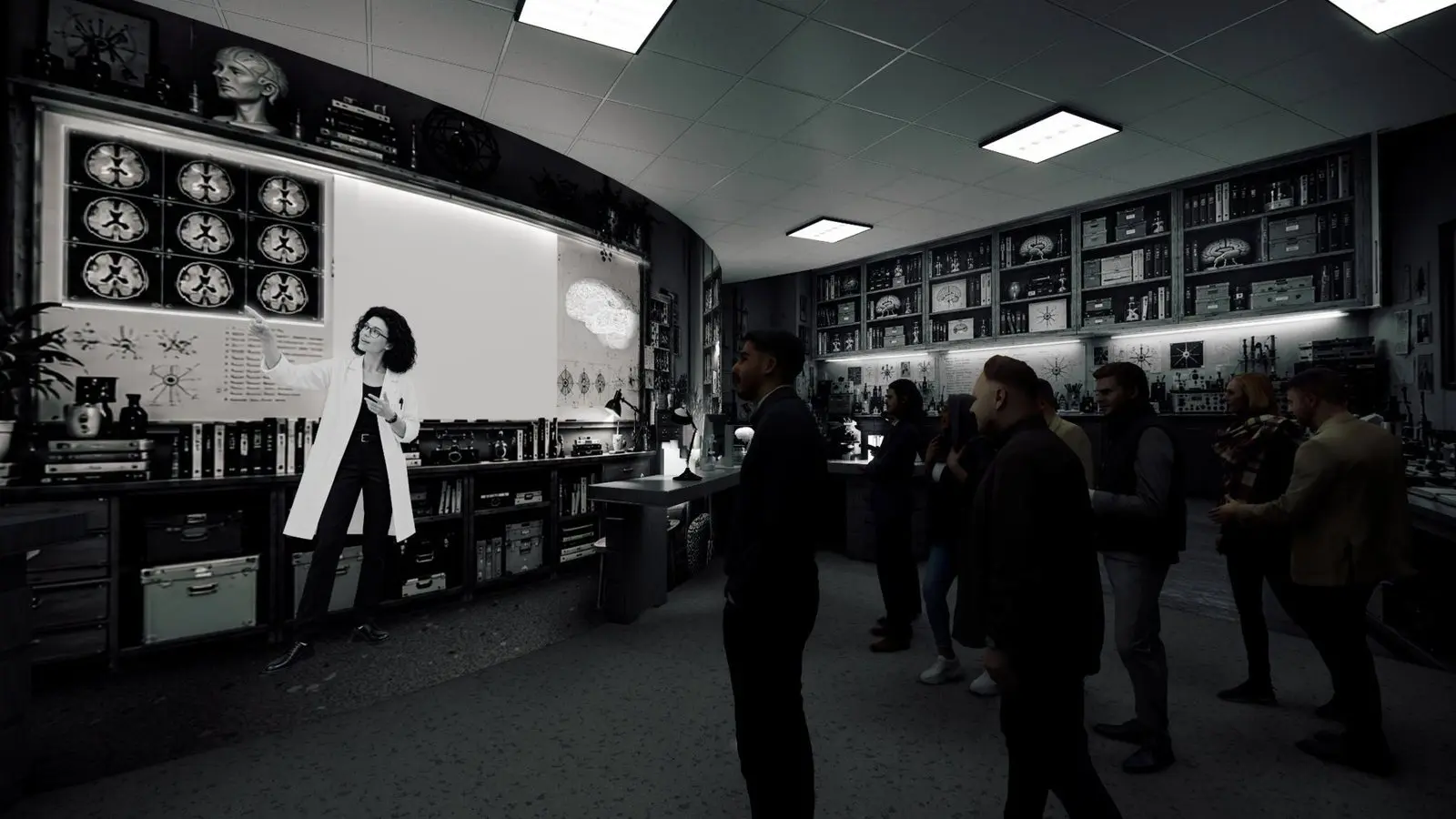
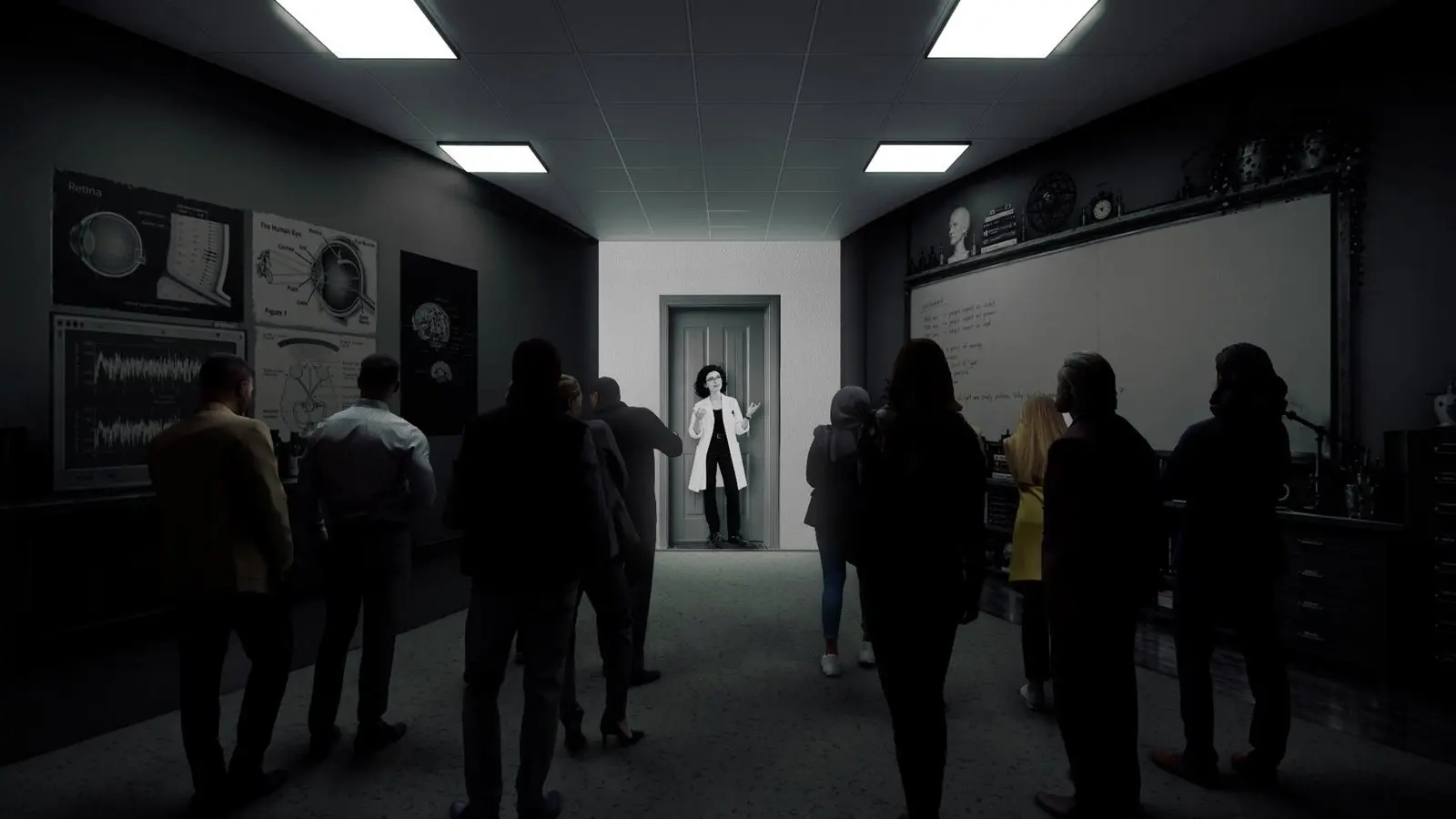
Mary, a neuroscientist, has spent her life in a black and white room, learning everything science can say about colour. Her lab is full of brain scans, diagrams and books. Now she appears before you on a screen and tells you what happened when she finally stepped outside and saw colour for the first time.
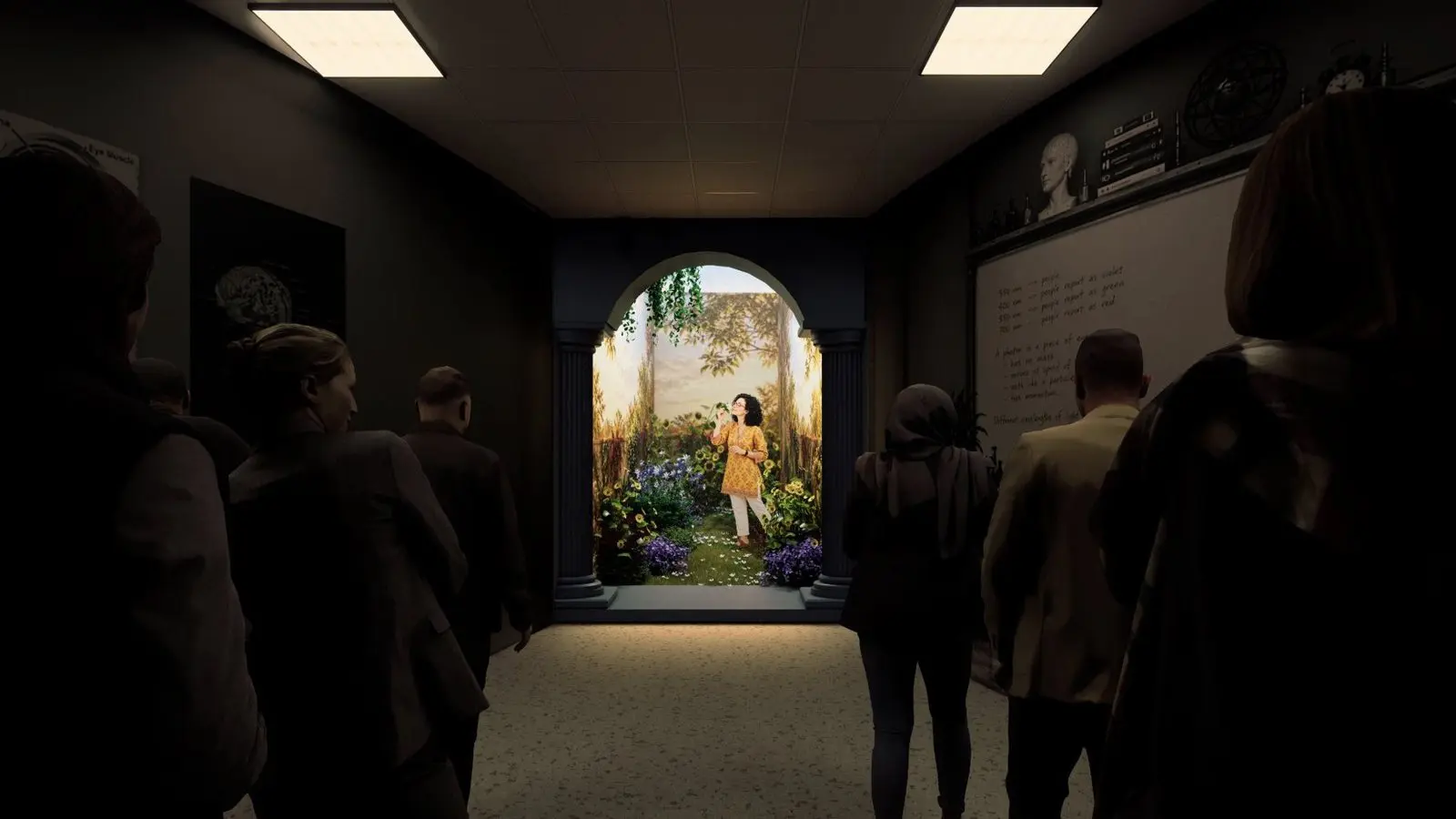
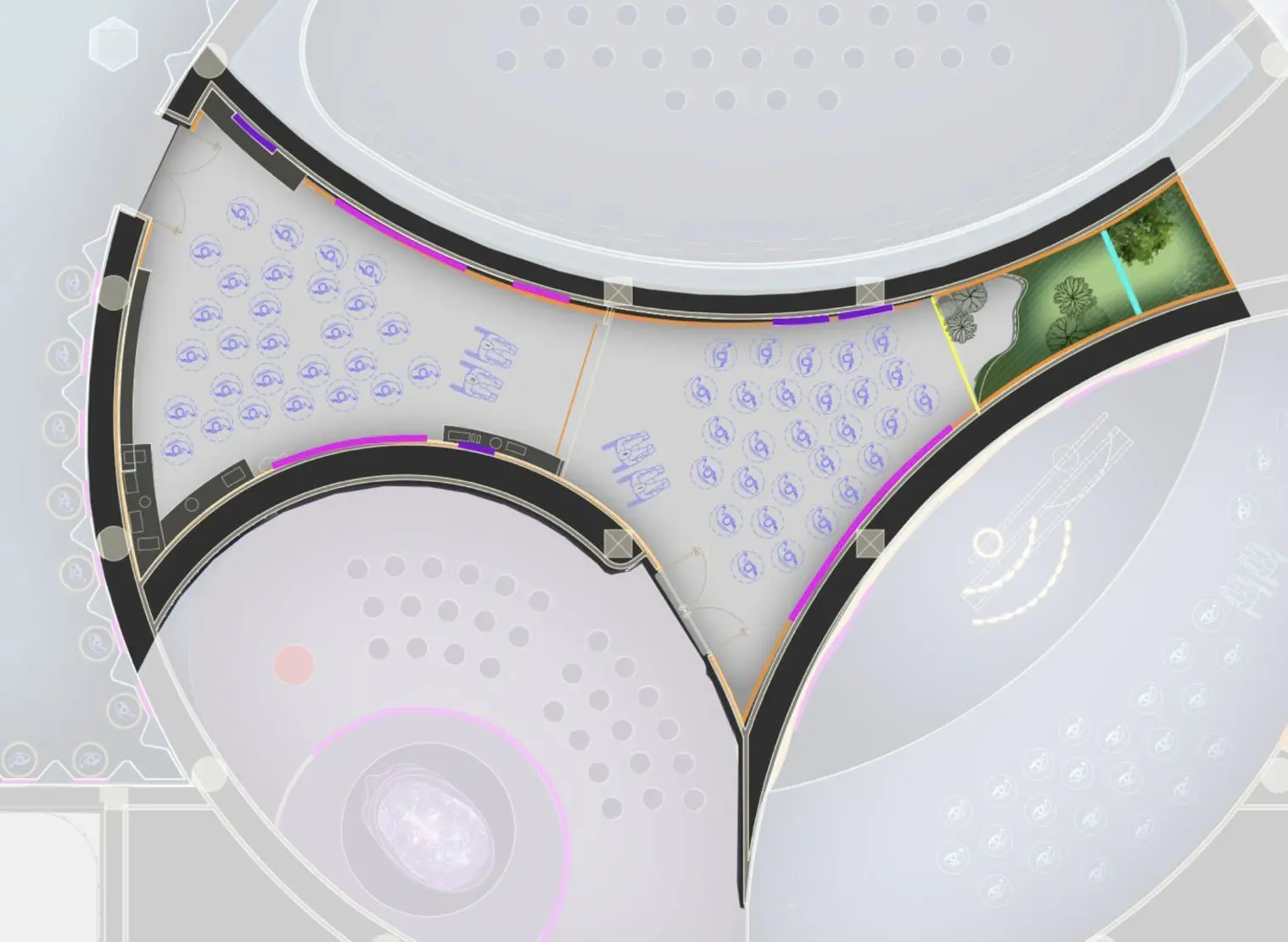
As she walks through the door in the projection, a magical garden is revealed behind the screen, and you watch a holographic Mary exploring a world of colour. She returns to explain the overwhelming difference between knowing about colour and actually experiencing it.
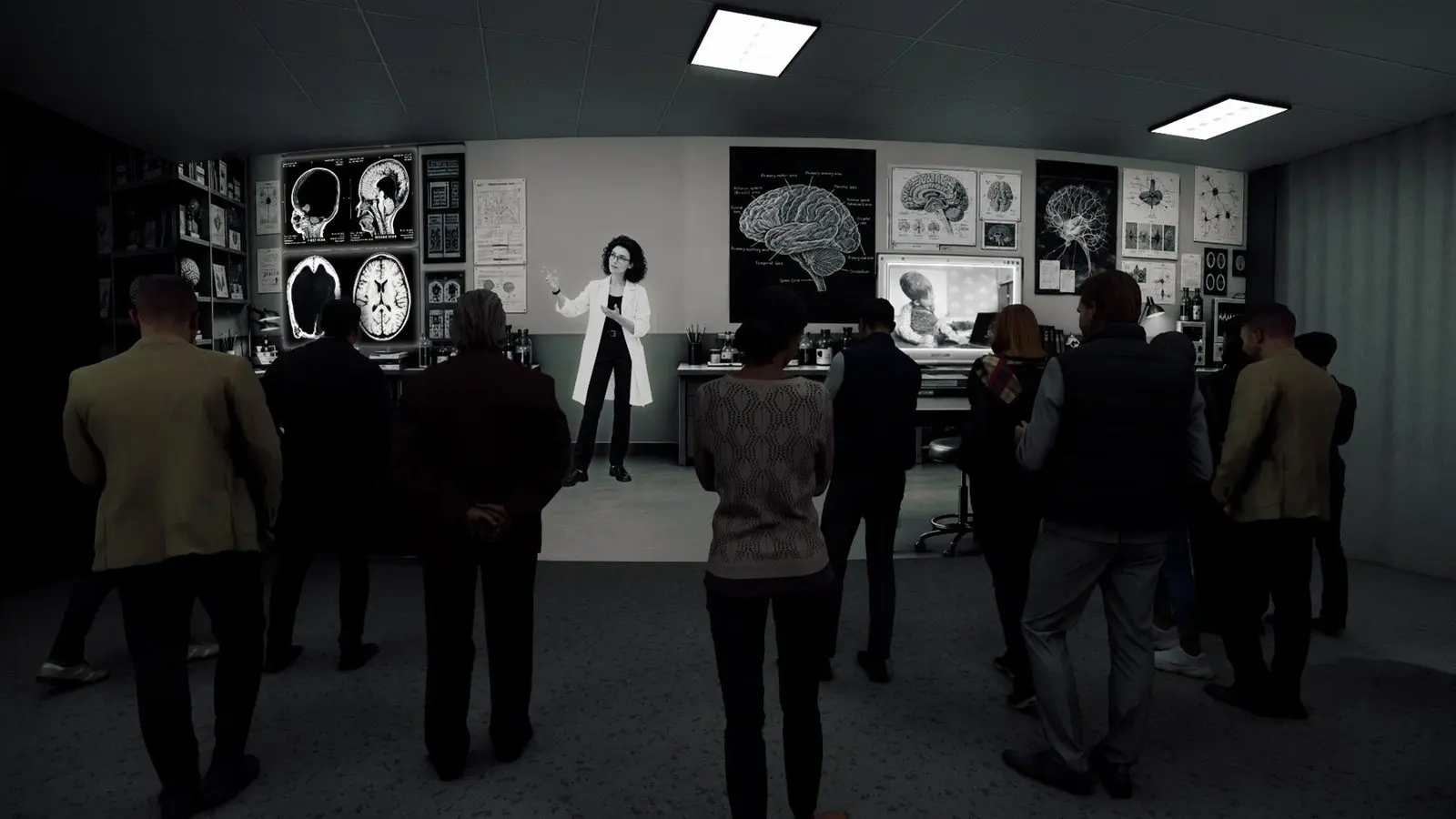
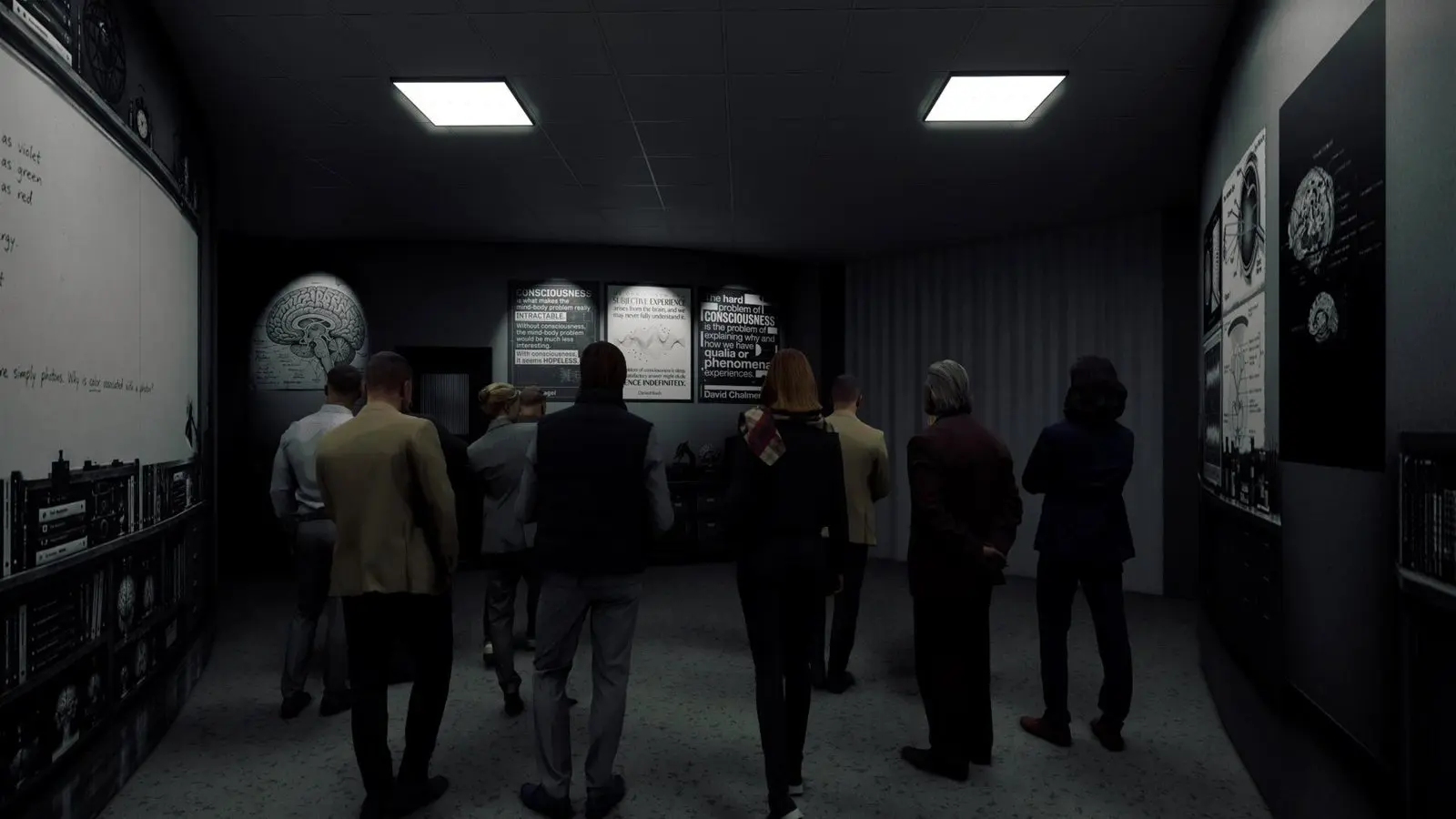
Mary recounts her research: she scanned the brains of people looking at red and blue, and could tell which scan belonged to which colour, yet the data never revealed what it feels like to see red. As the screen rolls up, she leads you into the second room, where she names this gap: the Hard Problem of Consciousness. Why do we see colours, hear sounds and taste at all?
Scene by scene
- 1Mary's Black and White Room
You stand in Mary's monochrome laboratory of brain scans, diagrams and books, where she learned every fact about colour without ever seeing it.
- 2Stepping into Colour
Mary walks through the door on the projection and a magical garden appears behind the screen. A holographic Mary explores it, seeing colour for the first time.
- 3Data and Experience
Mary explains that she could match brain scans to the colours people were seeing, yet the scans never showed what it feels like to see red or blue.
- 4The Hard Problem
The screen rolls up and Mary leads you on. Science can explain brain processes, she says, but not yet subjective experience: why we see colours, hear sounds and taste at all.
In pictures
The big idea
Science can explain brain processes, but not yet why they are accompanied by felt experience. This is the hard problem of consciousness, and it points to something more than the brain.
Questions it asks
- If Mary knows every fact about colour, what does she learn by seeing it?
- Can science explain what an experience is like?
- Where is consciousness?
You will come away understanding
- The Hard Problem of Consciousness: brain processes do not yet explain subjective experience.
- Remarkable facts about the brain and how colour vision works.
- Knowing about an experience is different from having it.
Bring it to life
Make this exhibit possible
Your support creates Mary's monochrome world and the magical garden beyond it, letting every visitor feel the wonder of colour as if for the first time.
Part of Phase 1: opening with the Temple in 2028Design Habit estimate for the gallery, including GST
Sponsor this exhibitLevel 1 · Who Am I?The whole level: galleries and visitor spaces
Sponsor the levelAny amountEvery gift is recorded for this exhibit and for SMOVP
Donate to this exhibitEstimates from Design Habit (April 2026), shown in US dollars at ₹95 per US$1. Final costs are confirmed with each sponsor.