Virtual Museum
Walk through every level in VR.
Educational Resources
Learning for students, scholars, devotees and curious minds
The museum is only the beginning. Through the SMOVP Educational Platform and the Deep Dive areas, every question raised in the galleries opens onto a world of study, in your own language.
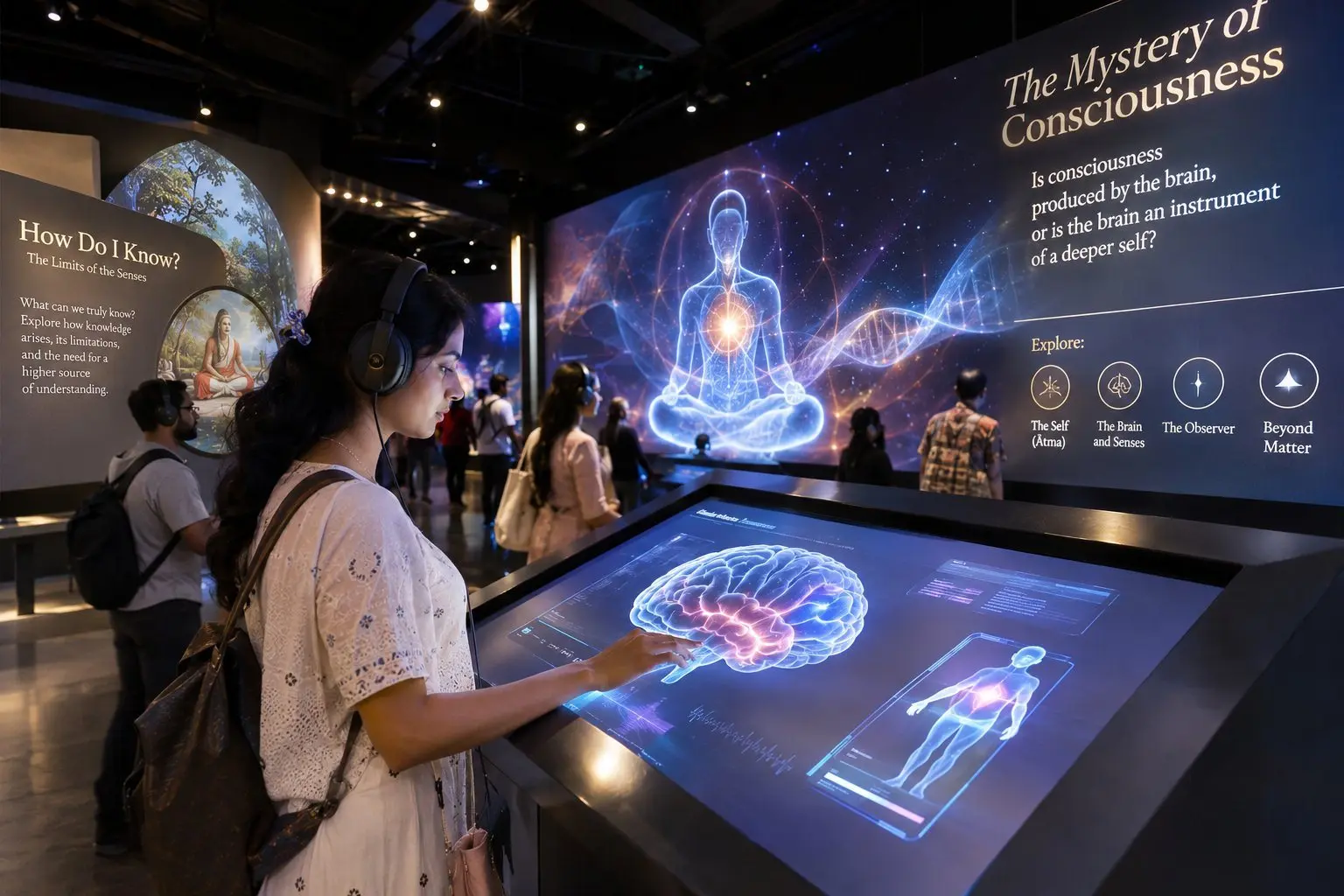
Online
An online learning platform is being created alongside the museum so that anyone, anywhere, can explore Vedic cosmology, consciousness and life with the same depth and care as in the galleries.
Short films, illustrated explainers, guided courses and source-referenced essays are being prepared, with the Virtual Museum and the Deep Dive areas connected to it. Everything will be available in all seven of the museum's languages.
Walk through every level in VR.
Step-by-step learning paths.
Scripture and science, carefully referenced.
Lessons and visit preparation for teachers.
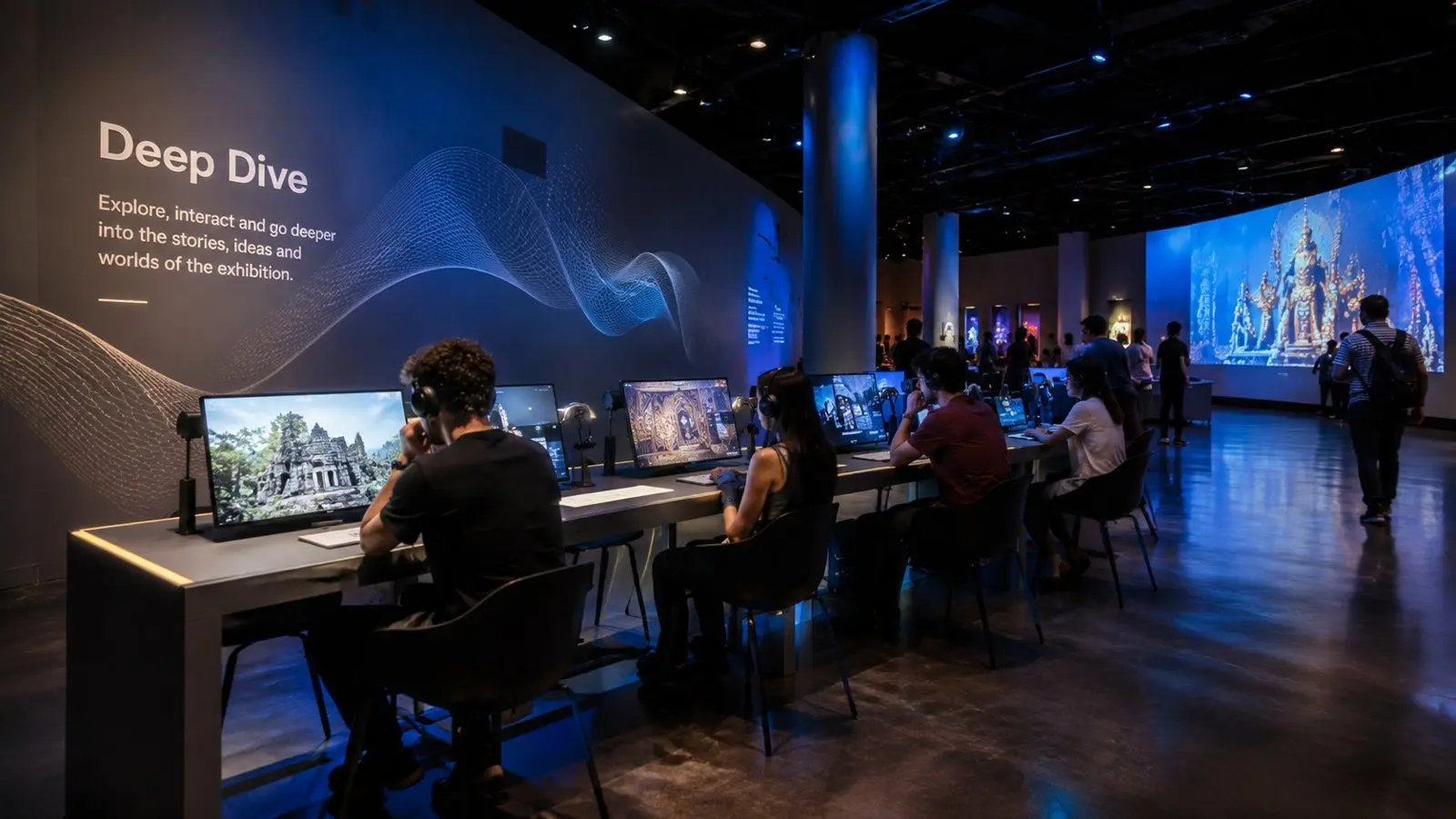
In the museum
Inside the museum, Deep Dive areas invite you to slow down: interactive stations, reading zones with a digital knowledge base and an AI research assistant, and immersive layers that let you explore every exhibit's sources at your own pace.
Glossary
Some key terms stay in Sanskrit because no English word does them justice: neither soul nor consciousness captures the full meaning of ātmā. A selection, with more to come.
The conscious self: a timeless spark of consciousness, distinct from body and mind.
The Supersoul: the Supreme Soul, witness in every heart, companion and guide of every atma.
A species type in the Vedic sense: embodied beings sharing a particular set of senses and organs of action.
Eternity, knowledge and bliss: the three features of the self.
Material nature; the material energy.
The modes of nature, sattva, rajas and tamas, that colour all experience.
Action and its consequence: the law by which the next birth follows desire and deeds.
The wheel of repeated birth and death through many species.
A valid means of knowing: perception (pratyakṣa), inference (anumāna) and authoritative testimony (śabda).
Revealed knowledge, not composed by human beings.
The succession of teachers and students through which knowledge is preserved.
The universal form: the living structure of the universe.
The cosmic egg: one universe with its fourteen planetary systems.
The spiritual sky, the effulgence of God.
The highest spiritual planet, the abode of Krishna.
Devotion: a living, heartfelt connection with the Divine.
Coming soon
Clear entry points to the museum's five questions.
Every Sanskrit term, transliterated, explained and illustrated.
Scholarly perspectives grounded in primary texts and sound science.
Age-appropriate lessons and preparation for school visits.
Previews and explanations from the galleries and the Virtual Museum.
Register your interest in school programmes and educator resources.
School and group interestOur approach
Every article makes clear what is said according to the Vedic texts, what is established by contemporary science, and what the museum invites you to explore. Our aim is to move beyond contrast and conflict towards an inclusive view, showing how Vedic knowledge can illuminate science.